Preparing for a Mortgage or Auto Loan
Planning to buy a home or a car? Your credit profile is the first thing to look at — before the lender looks at it.
Lenders look at a lot before approving a mortgage or auto loan — income, debts, available funds, loan terms, and credit history. If your reports carry inaccurate entries, collection accounts, or a balance that surprises you, those details can shape how the application is judged.
We help prospective borrowers see what is on their credit reports before they apply — reviewing the accounts listed, flagging anything that looks inaccurate, and talking about habits that support preparation. We will not promise that a lender will approve you, offer a certain rate, or change its requirements.
These are actual results from past clients, previously shared on Instagram. Every credit file is different, so treat these as examples of what the process can look like, not as a promise of what yours will do.
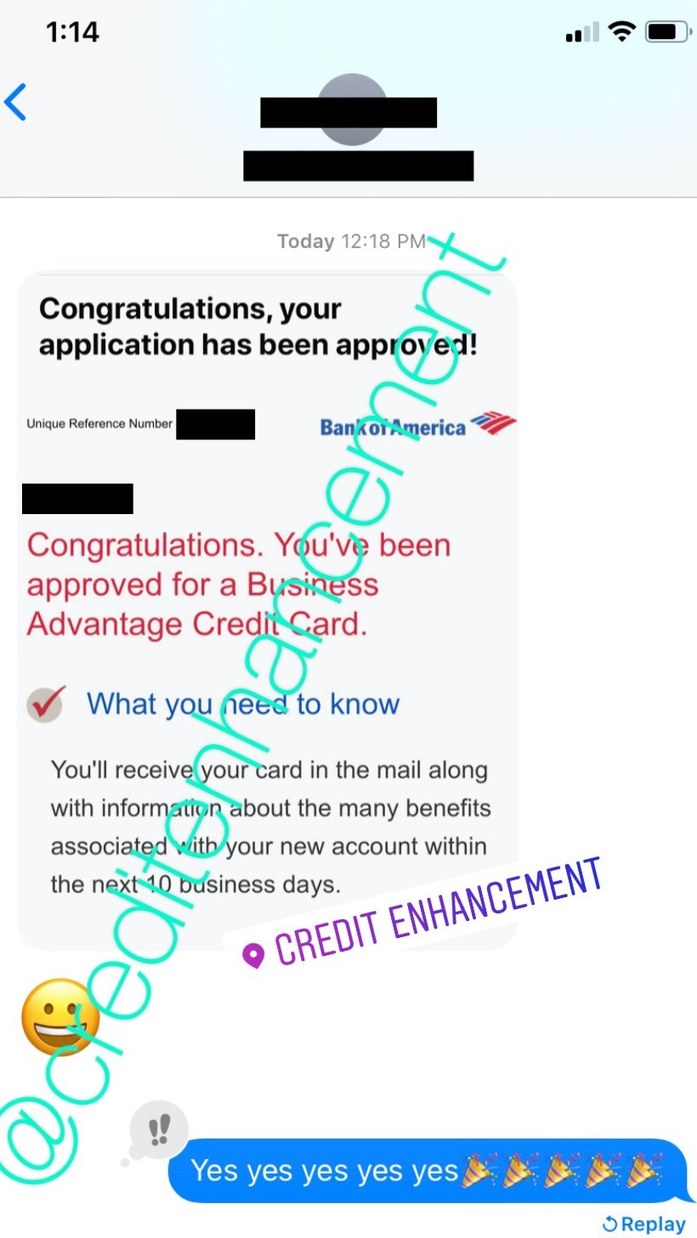
A client was approved for a Bank of America Business Advantage Credit Card in May 2020.
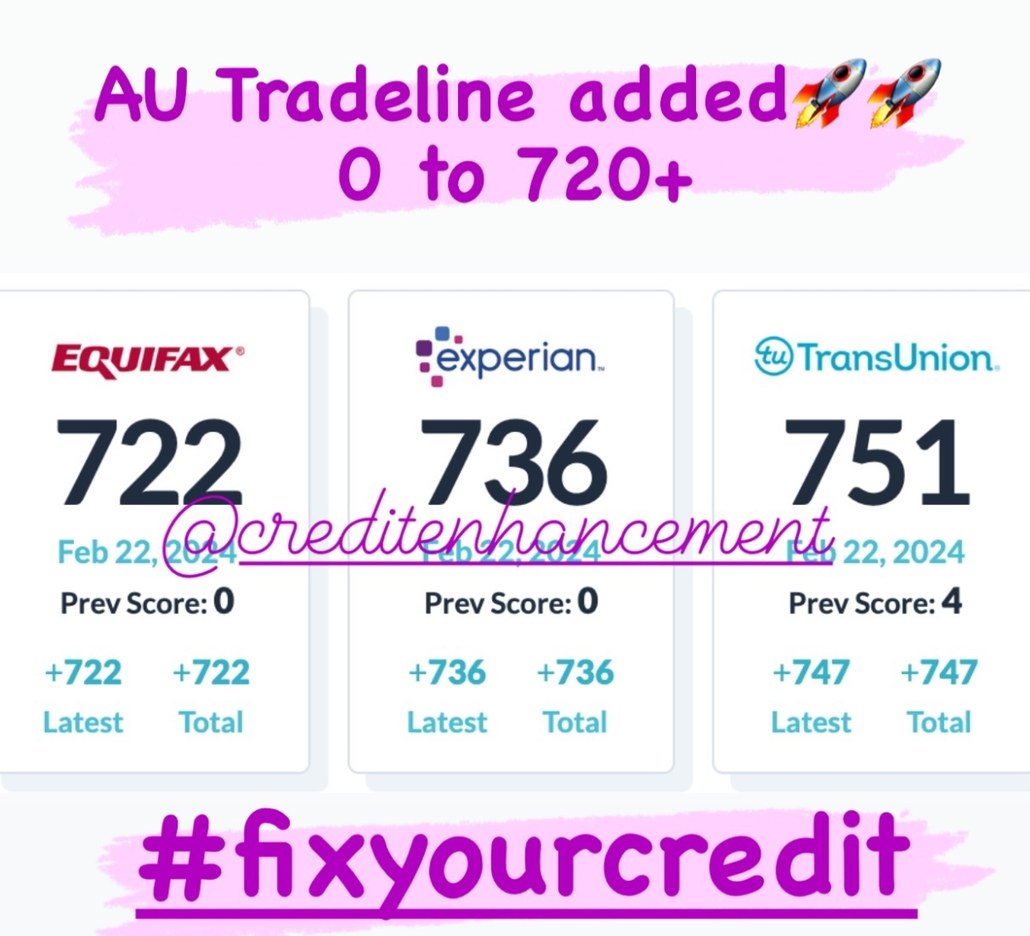
Authorized-user tradeline added: Equifax 722, Experian 736, TransUnion 751 from no credit history, February 2024.
Results vary from person to person and depend on what is in each credit file. Nothing here promises a particular score increase or deletion.
The rate you're offered starts with the number the lender pulls, and that number comes from your reports. For a dollar, you can see your scores from all three bureaus before the application, so you walk in knowing instead of guessing.
A few points either way can change a monthly payment. Know where you stand.
With MyScoreIQ, 7 days is $1 and then $34.99 a month if you stay on. Cancel anytime.
Many pieces go into a mortgage or auto loan application. We help you understand the credit-related information lenders may look at.
We go through the accounts, balances, and payment history showing on your reports, and explain what each piece means for your application.
Entries that look inaccurate deserve a closer look before you apply. We help you find them while there is still time to address them.
Outstanding balances and existing obligations matter alongside income and loan terms. We explain how lenders may weigh them.
Sometimes it helps to review or address credit concerns before submitting an application. We talk through the timing with you.
Reviewing statements, paying on time, avoiding applications you do not need — we talk through the habits that help you prepare.
When you have reviewed your credit before applying, you walk into the process knowing what the lender will find.
No one here can promise you a loan approval or a particular rate. Those decisions belong to the lender alone.
Some credit factors are in your hands; others are the lender's call. We help you tell the difference.
Tell us whether you are planning for a mortgage, an auto loan, or another kind of financing.
We review the reports and account details that matter for the application you have coming up.
We help you spot information that may be inaccurate or need a closer look before you apply.
We talk about the credit habits that support your preparation and the timing of your application.
No. Whether you qualify for a mortgage depends on income, debts, available funds, the loan program, and the lender's underwriting criteria. What we can do is help you understand your credit information and spot potential inaccuracies.
Reviewing your reports first can reveal inaccuracies and clarify your profile. We can talk about whether it makes sense to review or address credit concerns before you apply.
A mortgage application usually means a hard inquiry, which may affect your score. When several mortgage inquiries happen within a short period, scoring models sometimes treat them differently — ask the lender how inquiries are handled.
We can help you understand what is on your reports, explain potential inaccuracies, and talk about responsible credit habits. The decision of when to apply is yours.
A home or vehicle purchase coming up? Let us look at your credit before you apply. Call (956) 264-1232.